

Sleep is one of the most important factors for overall health, yet millions of people struggle to get enough of it every night. From insomnia to poor sleep quality, many are looking for small, natural changes they can make to improve their rest. One surprisingly simple habit that has gained popularity is sleeping with socks on. While it might sound trivial, there’s actual science behind how wearing socks to bed can help some people sleep better.
In this article, we’ll explore why socks can improve sleep quality, the physiological mechanisms involved, who might benefit the most, and the best practices for trying this trick yourself.
The Science Behind Sleeping With Socks
At first glance, socks seem to have nothing to do with sleep — but temperature regulation plays a critical role in how quickly we fall asleep and how deeply we rest.
When you’re trying to sleep, your body begins a natural process called thermoregulation, which lowers your core temperature by about 1–2°F. This cooling process signals to your brain that it’s time to rest. Interestingly, warming your extremities — hands and feet — can actually help your body cool down faster.
Socks work by gently warming your feet, which dilates blood vessels (a process known as distal vasodilation). This improves blood circulation, allowing heat to escape through your skin more efficiently, and helps your core body temperature drop. The result? Many people fall asleep faster and stay asleep longer.
Benefits of Sleeping With Socks
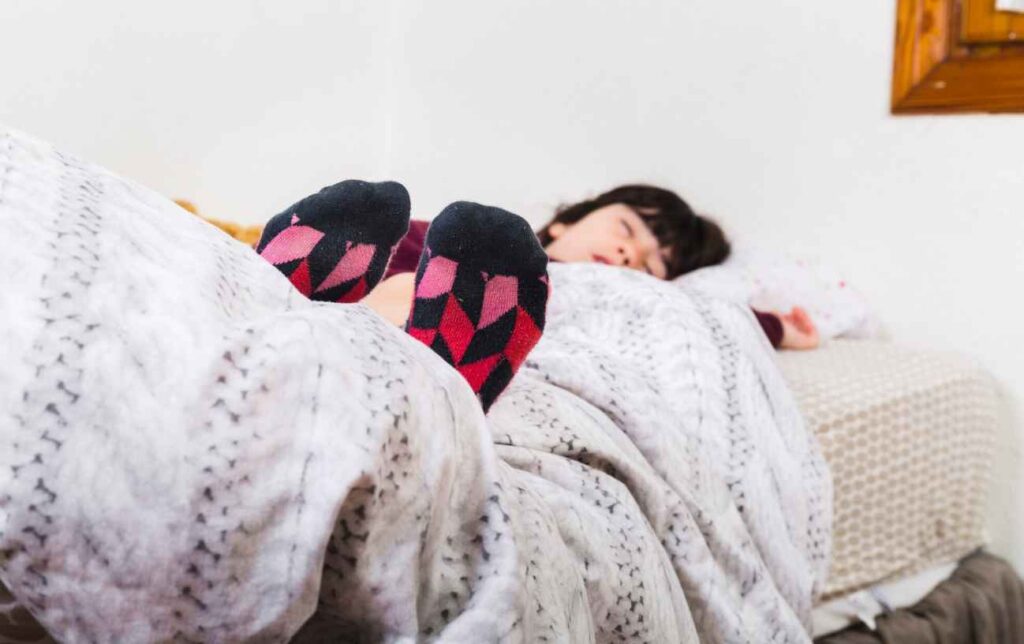
1. Faster Sleep Onset
Studies have shown that people who warm their feet before bed fall asleep up to 15 minutes faster on average. By wearing socks, you’re giving your body a natural cue that it’s time to wind down.
2. Deeper, More Restorative Sleep
A consistent and slightly cooler core body temperature is linked with longer periods of deep sleep, the most restorative stage of the sleep cycle. Wearing socks helps maintain the right temperature balance through the night.
3. Better Blood Circulation
Cold feet can cause constricted blood vessels, which may reduce circulation and even wake you up during the night. Socks keep feet warm, encouraging good blood flow. This is particularly helpful for individuals with conditions like Raynaud’s disease or poor peripheral circulation.
4. Reduced Nighttime Waking
If you frequently wake up because of cold feet or discomfort, socks can help you stay warm and cozy, reducing the likelihood of nighttime disturbances.
5. Comfort and Relaxation
For many people, socks simply make them feel comfortable and secure. This psychological sense of coziness can help signal safety and relaxation — an important factor in good sleep.
Who Benefits the Most From Wearing Socks
Not everyone needs socks to sleep better, but certain groups are more likely to see significant benefits:
- People with Cold Feet: If your feet often feel icy at night, socks can be a game-changer.
- Older Adults: Aging can affect circulation, making socks helpful for staying warm.
- People With Poor Circulation: Conditions like diabetes or peripheral vascular disease can cause cold extremities — socks can improve comfort.
- Those Living in Cold Climates: When bedroom temperatures drop, socks add an extra layer of warmth.
- Insomniacs or Restless Sleepers: Small rituals like putting on socks can become part of a relaxing bedtime routine.
Choosing the Right Socks for Sleep
Not all socks are created equal — and wearing the wrong pair could make you feel overheated or uncomfortable. Here’s what to look for:
- Breathable Material: Choose natural fibers like cotton, bamboo, or merino wool to prevent sweating.
- Not Too Tight: Avoid socks with tight elastic bands that can restrict circulation.
- Clean & Fresh: Always wear clean socks to prevent bacteria buildup or odors.
- Lightweight: Opt for thin, lightweight socks to avoid overheating.
If you don’t like wearing socks to bed, you can try other methods such as warming your feet with a hot water bottle or taking a warm foot bath 10–15 minutes before bedtime.
When Not to Wear Socks
While socks are generally safe, there are a few cases where you should skip them:
- If You Overheat Easily: People who tend to run hot at night may find socks uncomfortable.
- If You Have Athlete’s Foot or Fungal Infections: Wearing socks can trap moisture, worsening the condition.
- If Socks Leave Marks on Your Skin: This can indicate they’re too tight and affecting circulation.
Alternative Methods to Improve Sleep
Wearing socks is just one way to encourage better sleep. You can combine this habit with other proven sleep hygiene practices for maximum benefit:
- Keep your bedroom cool (around 65–68°F).
- Maintain a consistent sleep schedule.
- Limit screen time at least 30 minutes before bed.
- Use blackout curtains or an eye mask to block light.
- Avoid caffeine or heavy meals close to bedtime.
By pairing these methods with sock-wearing, you may notice even more significant improvements in your sleep quality.
Final Thoughts
Sleeping with socks on may seem like a small change, but for many people, it’s a surprisingly effective way to improve rest. By gently warming your feet, socks help your body regulate temperature, speed up sleep onset, and keep you comfortable throughout the night.
If you struggle with cold feet, wake up often during the night, or just want to experiment with better sleep habits, give it a try. Choose a pair of breathable, comfortable socks and make them part of your bedtime routine.
Sometimes, the simplest solutions — like slipping on socks before bed — can lead to the most noticeable improvements in your sleep quality.