Hydration is often treated like a background habit—something you’re supposed to do, but rarely think deeply about. Drink water. Carry a bottle. Done.
But inside your body, hydration quietly decides how strong you feel, how long you last, and even how your skin behaves. Not in dramatic ways—but in small, constant ones that add up.
This isn’t about chugging gallons or following trends. It’s about how water actually moves through your body and changes how it works.
Hydration and Strength: Why Muscles Need More Than Protein
Muscles aren’t solid blocks of strength. They’re mostly water.
In fact, muscle tissue is made up of about 75% water, and that water isn’t just “there”—it helps muscles contract smoothly and recover faster.
When you’re even slightly dehydrated:
- Muscle fibers lose elasticity, making movements feel heavier
- Nerve signals travel more slowly
- Your body struggles to maintain power during repeated effort
Here’s a lesser-known detail:
Dehydration reduces muscle leverage, meaning your muscles have to work harder to produce the same force. You’re not weaker—you’re less efficient.
That’s why strength sometimes drops on days when nothing else has changed.
Why Hydration Affects Endurance More Than You Realize
Endurance isn’t just about lungs or mindset. It’s about how well your body manages heat, blood flow, and energy over time.
Water plays a direct role in all three.
When hydration drops:
- Blood thickens slightly, making circulation harder
- Heart rate rises sooner during activity
- Cooling systems (like sweating) become less effective
A surprising fact most people don’t hear:
A 1–2% drop in body water can reduce endurance before you feel thirsty.
That’s why fatigue sometimes shows up “out of nowhere.” The signal comes after performance starts slipping.
Hydration doesn’t give you more stamina—it protects the stamina you already have.
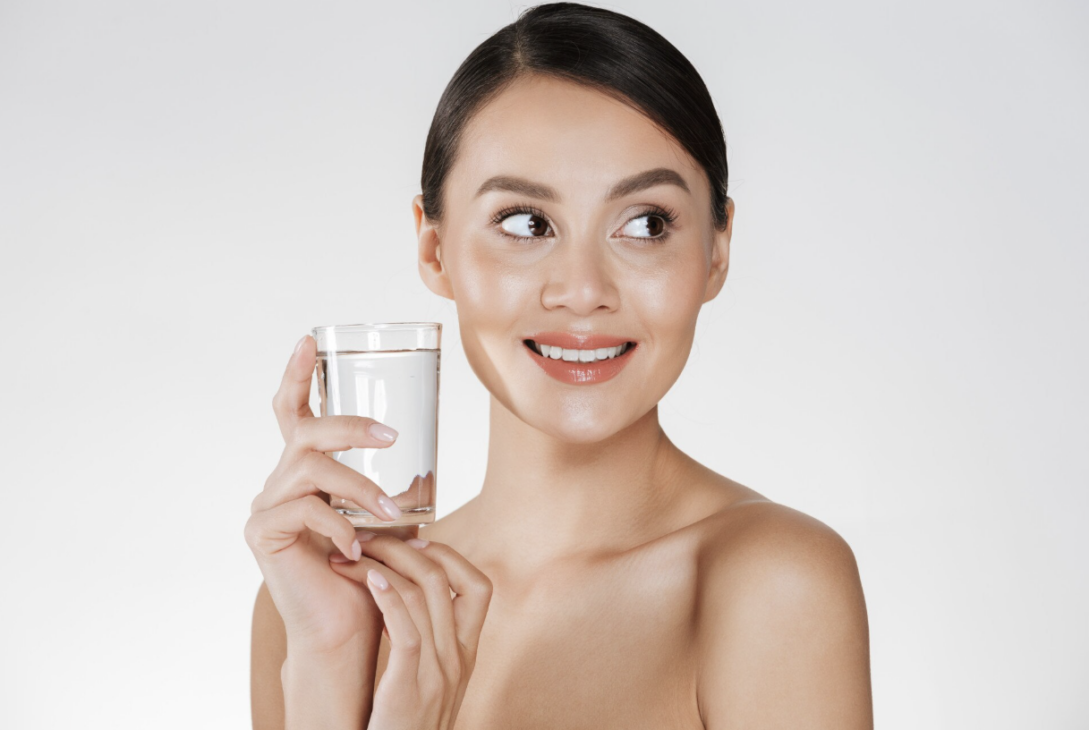
Skin Hydration: It’s Not Just About What You Put On Your Face
Skin is often described as a mirror of hydration, but not in the way most people think.
Drinking water doesn’t instantly “plump” skin. Instead, hydration:
- Supports skin cell turnover
- Helps maintain the skin barrier
- Reduces low-level inflammation that shows up as dullness or irritation
Here’s the part rarely mentioned:
When the body is low on water, it prioritizes vital organs over skin. Skin hydration is one of the first things to be compromised.
That’s why dry or tired-looking skin can appear even when skincare stays the same.
Water doesn’t replace skincare—it makes it work better.
The Brain–Body Connection Nobody Talks About
Hydration affects strength and endurance partly because it affects the brain.
Even mild dehydration can:
- Slow reaction time
- Increase perceived effort
- Make simple tasks feel harder than they should
This changes how workouts feel, how long you push, and how quickly you give up.
Your body might still be capable—but your brain quietly taps the brakes.
Hydration Isn’t About “More” — It’s About Timing
One of the biggest hydration myths is that more water is always better.
What actually matters:
- Consistent intake, not last-minute fixes
- Drinking before you feel thirsty
- Pairing water with meals and movement
Your body absorbs water better when it’s spread out, not forced in all at once.
Hydration is a rhythm, not a rescue plan.
What Proper Hydration Really Feels Like
When hydration is dialed in, most people don’t feel anything dramatic.
Instead, they notice:
- Strength feels more “available”
- Workouts feel smoother, not easier
- Skin looks calmer, not shinier
- Energy dips happen less often
Nothing magical—just fewer internal obstacles.
The Takeaway
Hydration doesn’t make you stronger, faster, or clearer overnight.
It does something quieter and more powerful:
it removes friction from how your body already works.
Strength flows better. Endurance lasts longer. Skin repairs itself more easily.
Water doesn’t steal the spotlight—but it keeps everything else from falling apart.