Most sleep advice sounds complicated. Blue-light filters. Supplements. Expensive mattresses.
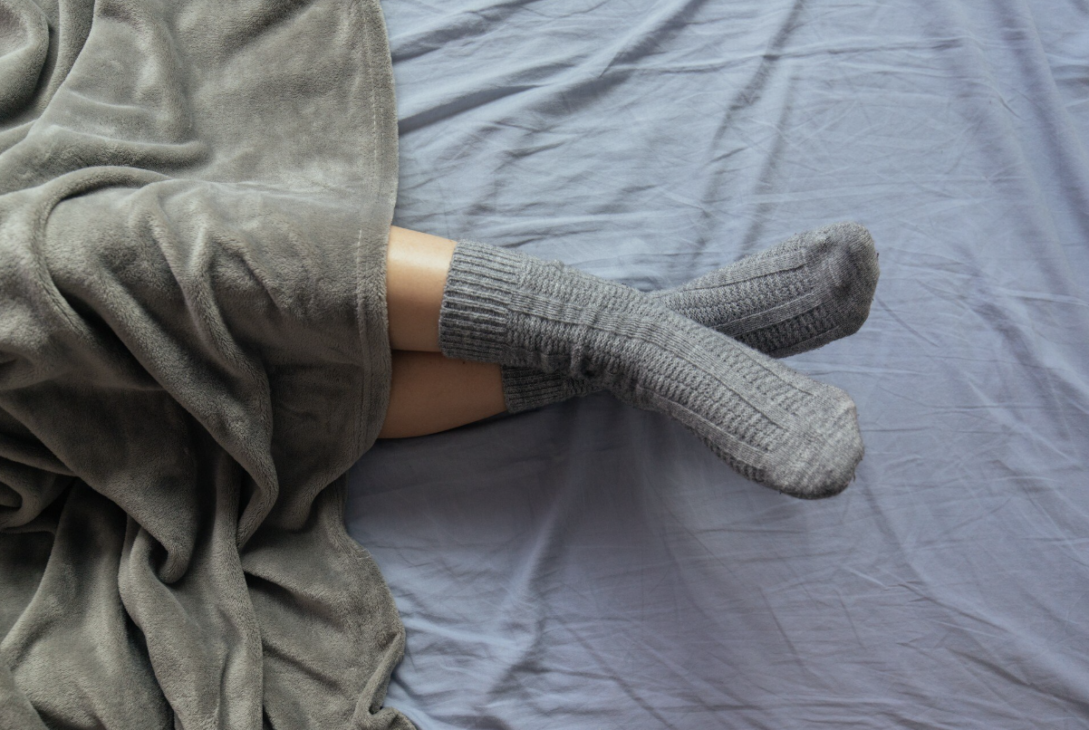
But one of the simplest habits is also the most ignored: wearing socks to bed.
It sounds almost too ordinary to matter—until you look at what actually happens inside the body when your feet stay warm.
Your Feet Are Tiny Temperature Sensors
Your feet play a quiet but powerful role in how your body decides it’s time to sleep.
They’re packed with blood vessels and nerve endings that help regulate body temperature. When your feet are cold, those vessels tighten. When they’re warm, they relax.
That relaxation matters because:
- Relaxed blood vessels improve circulation
- Better circulation helps your core temperature drop
- A lower core temperature signals your brain that it’s time to sleep
This is why people often fall asleep faster after a warm shower—and why socks can create a similar effect without the effort.
Warm Feet Help Your Body “Switch Modes”
Sleep doesn’t begin in the brain alone. It begins in the body.
When your feet warm up:
- Blood moves more freely to the skin
- Heat gently escapes from the core
- Your nervous system shifts toward rest mode
This process is called distal vasodilation, and it’s one of the body’s natural sleep triggers. Socks simply support a system that already exists.
No forcing. No tricks.
Why This Matters More as You Get Older
As we age, circulation naturally slows—especially to the hands and feet. That’s why many adults complain of cold feet at night, even in warm rooms.
Cold feet can:
- Delay the moment you fall asleep
- Cause subtle nighttime wake-ups
- Make sleep feel lighter than it should
Socks act like a gentle assist, helping the body do what it struggles to do on its own.
The Sleep Quality Effect People Don’t Talk About
Here’s a lesser-known detail: people who sleep with warm feet often experience fewer micro-awakenings.
These are tiny moments when your body wakes just enough to shift positions or adjust temperature—without you remembering it.
Fewer micro-awakenings can mean:
- Deeper sleep cycles
- Less tossing and turning
- Waking up feeling more “rested,” not just awake
It’s not about sleeping longer.
It’s about sleeping smoother.
Not All Socks Work the Same
This isn’t about thick, tight, or synthetic socks.
The best choice is:
- Breathable
- Loose-fitting
- Natural fibers like cotton or wool blends
The goal is warmth without trapping heat. If your feet overheat, the body pushes back—and the benefit disappears.
Think comfort, not insulation.
Why This Habit Sticks (When Other Sleep Tips Don’t)
People give up on sleep advice when it feels like work.
Socks don’t require:
- Changing your routine
- Buying gadgets
- Tracking anything
You either wear them or you don’t.
And because the effect is subtle but noticeable—falling asleep a little faster, waking up a little calmer—the habit reinforces itself.
The Takeaway
Wearing socks to bed doesn’t “hack” your sleep.
It removes a small obstacle your body has been quietly dealing with all along.
Sometimes better sleep doesn’t come from doing more.
It comes from making the body feel safe, warm, and unhurried—starting with your feet.