Modern medicine has given us incredible breakthroughs — from antibiotics to advanced surgeries — but before pharmacies and hospitals became the norm, health care often began right at home. Our grandparents, and generations before them, relied on time-tested natural remedies, practical wisdom, and resourcefulness to treat everyday ailments.
Today, many of these remedies are making a comeback as people seek more natural, holistic approaches to health. Let’s explore the fascinating world of traditional cures, why they worked, and what we can still learn from them today.
The Wisdom of Simplicity
Our grandparents didn’t always have access to doctors, especially in rural areas. Instead, they turned to what they had on hand — herbs from the garden, ingredients from the kitchen, and techniques passed down through generations.
These weren’t just random guesses. Over time, families learned through observation and experience what eased pain, sped healing, and restored comfort. While some remedies were based on folklore, many were surprisingly effective — and science is now catching up to explain why.
Kitchen Cabinet Cures
One of the most fascinating aspects of traditional remedies is how often they relied on everyday ingredients:
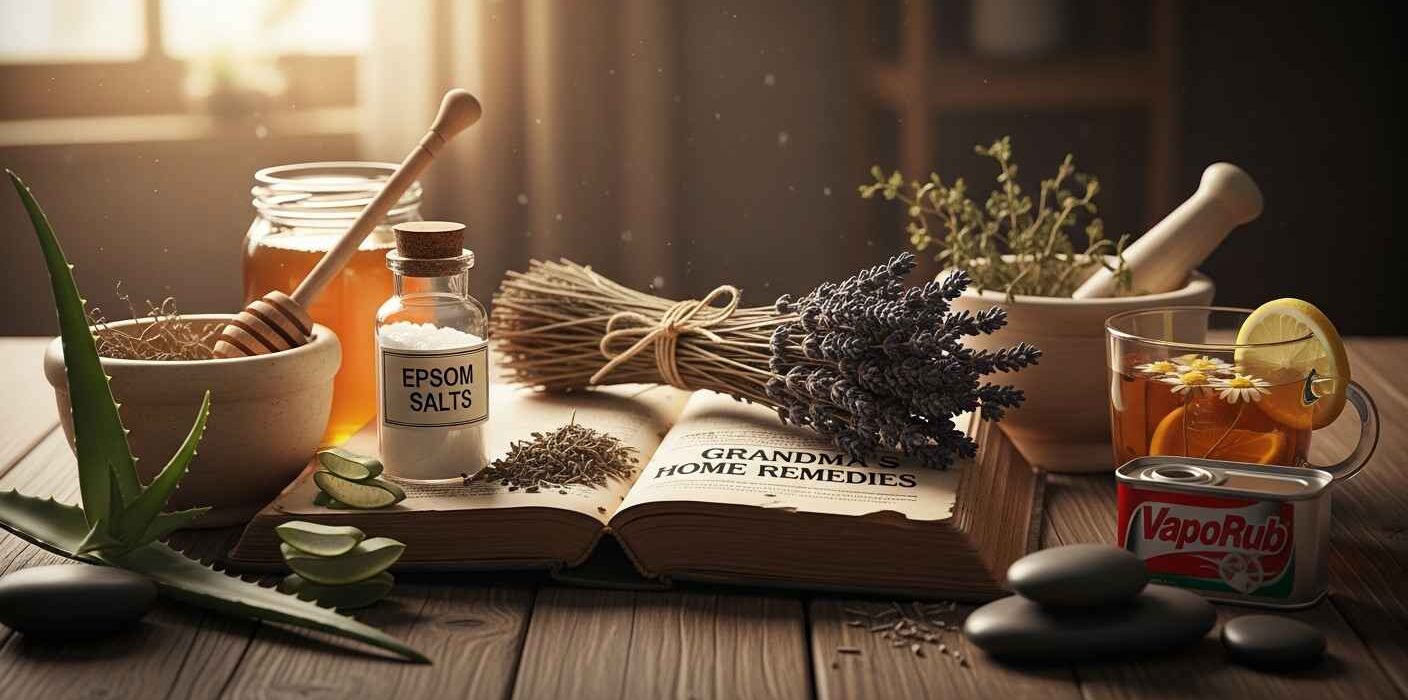
- Honey for Coughs & Wounds: Our grandparents knew that a spoonful of honey could soothe a sore throat — and today, research confirms its antibacterial properties. Honey also served as a natural wound dressing thanks to its ability to fight infection.
- Ginger for Nausea: Ginger tea or chews were a common go-to for motion sickness, upset stomach, or morning sickness — a remedy still recommended by doctors today.
- Vinegar for Digestion: A splash of apple cider vinegar before meals was thought to aid digestion and prevent heartburn. Modern studies suggest it may help balance stomach acid and regulate blood sugar.
- Salt Water Gargle: Simple yet effective, gargling warm salt water helped relieve sore throats and prevent infections — a remedy that remains a first-line treatment.
Herbs and Garden Medicine
Many households once grew their own “medicine chest” in the garden:
- Chamomile: Used as a calming tea for stress, anxiety, and indigestion.
- Peppermint: Brewed to ease headaches, muscle pain, and upset stomach.
- Garlic: Valued as a natural antibiotic and immune booster — often eaten raw or mixed with honey during cold season.
- Aloe Vera: Snapped fresh from the plant and applied to burns, cuts, and insect bites to speed healing.
Today, herbal remedies are widely available in teas, tinctures, and supplements — proof that the wisdom of the garden still holds power.
Home Therapies & Techniques
Beyond herbs and food, our grandparents also relied on simple physical remedies:
- Warm Compresses & Poultices: Used to reduce pain, swelling, and infection. A poultice of onion or mustard was often applied to the chest for congestion.
- Epsom Salt Baths: Known to relax muscles, reduce inflammation, and even draw out splinters.
- Castor Oil: Given for constipation or rubbed on sore joints — though it was also dreaded by many kids who had to swallow it!
- Cod Liver Oil: Packed with vitamin D and omega-3s, it was given daily to promote strong bones and immunity.
These methods focused not just on treating symptoms but also on supporting the body’s natural healing processes.
Why These Remedies Worked
While not every old-fashioned remedy was effective (or pleasant!), many were grounded in science even if the science wasn’t yet understood. Honey’s antibacterial effects, ginger’s anti-nausea compounds, and garlic’s immune-boosting properties have all been confirmed by modern research.
Moreover, these remedies encouraged a slower, more attentive approach to health. Taking time to brew tea, apply a poultice, or rest with a warm compress was often as important as the treatment itself.
Lessons for Today
In a world where we often look for quick fixes, revisiting our grandparents’ approach can be refreshing. Here’s what we can take away:
- Prevention is Powerful: Many remedies focused on staying healthy — eating well, getting fresh air, and taking care of small issues before they became big problems.
- Simplicity Matters: You don’t always need complicated treatments. Sometimes, the simplest solutions — like rest, hydration, and natural ingredients — work best.
- Listen to Your Body: Our grandparents often relied on intuition and observation. Paying attention to how you feel is still a cornerstone of good health.
When to Be Cautious
It’s important to remember that not all old remedies were safe. Some used substances we now know are toxic, and others could delay proper treatment for serious conditions.
Today, we have the benefit of combining the best of both worlds — natural, time-tested remedies and modern medical knowledge. Always consult a doctor before replacing prescribed treatments with home cures, especially for chronic or severe conditions.
The Modern Comeback of Traditional Remedies
As interest in natural health grows, many of these remedies are being rediscovered and studied. Herbal teas, essential oils, probiotic foods, and mindfulness practices are enjoying a resurgence — blending ancient wisdom with modern science.
Even hospitals are beginning to integrate holistic approaches such as aromatherapy, acupuncture, and nutrition counseling as part of patient care, recognizing that wellness is about more than just medication.
Conclusion: Honoring the Past, Healing the Present
The remedies of our grandparents remind us that healing doesn’t always come from a pill bottle. Sometimes, it comes from the kitchen, the garden, or simply taking time to care for ourselves.
By blending the practical wisdom of the past with the knowledge of today, we can create a balanced approach to health — one that respects both tradition and progress.
The next time you sip ginger tea for nausea or add garlic to your soup during flu season, remember: you’re not just taking care of yourself — you’re carrying forward generations of wisdom.